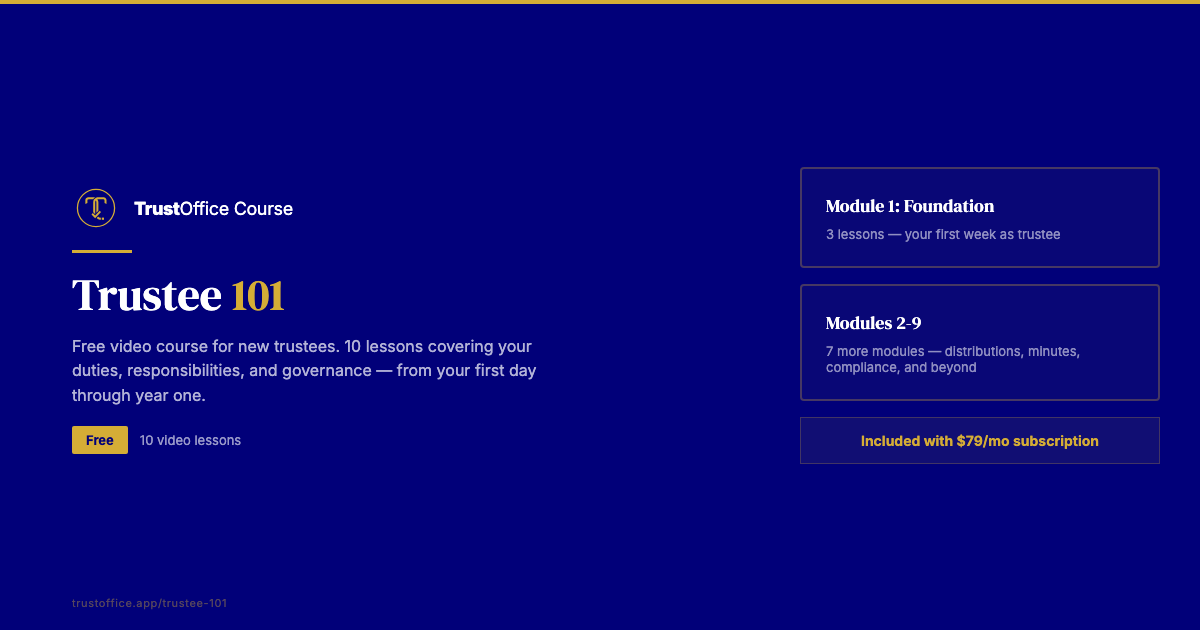
Participate in a Free Trustee Course to Advance Your Expertise Today
Signing up for a free trustee course can tremendously strengthen one's professional competencies. It furnishes fundamental knowledge on fiduciary responsibilities and asset management. Attendees can progress at their own pace while networking among business leaders. This possibility not only broadens insight but also facilitates advancement for job progression. However, many may reflect what particular skills they can expect to obtain and how these can be put to use in real-life applications.

Important Expertise You'll Master From a Free Trustee Course
A free trustee course equips participants with fundamental knowledge vital for sound management and oversight. The curriculum generally includes key topics such as financial literacy, allowing trustees to comprehend budgets, financial statements, and investment strategies. Participants also gain insights into regulatory obligations, guaranteeing compliance with regulations and ethical standards.
Moreover, the educational program improves strategic direction abilities, equipping members to advance long-term organizational goals. Effective communication talents are another key significant feature, allowing trustees to communicate ideas with clarity and collaborate with relevant parties effectively.
Furthermore, collaborative and managerial skills are stressed, encouraging teamwork among board members and promoting a productive deliberation process. Conflict resolution techniques are also instructed, preparing participants to navigate disagreements professionally.
Ultimately, these qualifications not only prepare individuals for their positions as trustees but also enhance their overall organizational skills, making them critical components to any organization.
Top Motives to Enroll in a Free Trustee Class for Career Advancement
Many career experts are seeking methods for improving their professional development, and enrolling in a free trustee course offers unique perks that can greatly boost one's career advancement. To begin, these educational programs provide vital knowledge about fiduciary responsibilities, boosting a professional's standing in their field. Learning the moral and legal commitments of a trustee can unlock fresh job prospects and responsibilities.
Additionally, connecting with industry experts and colleagues during these courses can result in valuable connections that may facilitate career advancement. Participants also develop practical abilities in financial management and governance, which are increasingly sought after in various insightful guide fields. Finally, the adaptability of digital learning allows individuals to study at their own pace, making it easier to balance education with current work responsibilities. Overall, signing up for a free trustee course not only enriches knowledge but can also significantly improve professional prospects and career growth.
Finding the Top Free Trustee Course for You
How can one determine the most fitting free trustee course among the numerous choices offered? First, people must evaluate their exact necessities and vocational aims, establishing what competencies or learning deficiencies they aim to fill. Next, investigating curriculum and design is crucial; a well-defined copyright can indicate whether the course will fulfill personal goals.
Furthermore, assessing the qualifications of the instructors can provide understanding into the quality of instruction offered. Reviews and testimonials from previous students are invaluable, as they reflect actual results and experiences.
Finally, reviewing the flexibility of the course layout—whether it is self-directed or scheduled—can help in selecting a course that suits one's way of living. By taking these elements into account, learners can make a more informed decision, making sure the chosen course aligns with their professional aspirations and learning preferences.
Powerful Solutions for Optimizing Your Trustee Course Training
To get the most out of the benefits of a trustee course, a strategic approach is needed. Participants must start by setting clear goals and identifying the particular skills or knowledge they want to gain. Active engagement in the learning process is essential; this involves joining discussions, asking questions, and working together with peers. Consistently reviewing course content supports better understanding and retention of crucial concepts.
Furthermore, it is helpful to take notes and compile outlines of key subjects, enabling simpler review afterward. Connecting with peer attendees can offer useful perspectives and assistance, cultivating a community atmosphere. Utilizing additional materials, such as recommended readings or online forums, can enhance comprehension and application of learned skills.
In conclusion, applying the knowledge in practical scenarios, whether through real-world applications or simulations, consolidates learning and strengthens assurance in trustee obligations. By implementing these strategies, individuals can fully take advantage of their trustee course experience for personal and professional growth.
Practical Implementations of Fiduciary Expertise in Management
Trustee abilities are vital in effective governance, enabling individuals to traverse complex organizational landscapes. These competencies are critical for fostering transparency, accountability, and ethical decision-making within different organizations, including nonprofits, educational institutions, and corporate boards. Trustees equipped with strong analytical abilities can assess organizational results, fiscal well-being, and adherence to regulatory standards, thereby enhancing overall governance.
Moreover, effective communication skills allow trustees to interact with stakeholders, ensuring that diverse perspectives are taken into account in decision-making frameworks. Conflict resolution skills are equally important, since they help preserving harmony and collaboration among board members and other stakeholders. Additionally, long-term planning capabilities enable trustees to synchronize organizational goals with wider objectives, ensuring sustainability and growth. In this way, the use of trustee skills in governance strengthens institutional frameworks but also fosters trust and integrity within communities and organizations.
Frequently Asked Questions
Do Professional Associations Acknowledge Complimentary Fiduciary Programs?
Free trustee courses may not always be recognized by professional organizations. Recognition generally relies on the program provider and the specific accrediting body, so candidates should confirm certifications before signing up for any program.
What Length of time Does a Common Free Trustee Course Need to Complete?
A common free trustee program typically takes between four to eight weeks to complete. Course duration may vary depending on the supplier, content depth, and student commitment, permitting for flexibility in learning schedules.
Is it Feasible to Acquire a Document Upon Finishing a Free Trustee Course?
Yes, attendees can typically get a certificate after finishing a free fiduciary course. However, certification availability may vary by provider, so people should confirm the specific details with the program provider before registering.
Is There a Cap to How Many Fiduciary Courses I Can Register For?
Generally, there is no limit on the amount of trustee courses one can enroll in. Learners are urged to engage in multiple courses to broaden their understanding regarding trustee responsibilities and governance.
What Qualifications Must Be Met to Participate in a Free Trustee Course?
To enroll in a free trustee program, students typically need a essential understanding of finance principles, dedication to the program duration, and sometimes background experience in fiduciary roles. Specific requirements may vary by institution.